The history of Laker Airways, the airline that sold London to New York for £59
Freddie Laker spent six years winning permission for Skytrain. Once it was flying, passengers could buy a seat across the Atlantic on the morning of departure.
To catch Freddie Laker’s flight from New York to London in September 1977, it helped to know an address in Queens. Tickets went on sale at 4 a.m. at the Laker Travel Center on Queens Boulevard in Rego Park. You brought cash or travelers checks, handed over your bag and caught the airline’s free bus to Kennedy Airport. The flight left at 11 that night. The Washington Post’s launch-day passenger guide
That peculiar journey was the bargain at the heart of Laker Airways. A traveler with time to spare could buy a one-way ticket to London for $135 plus $3 in departure tax. From Gatwick, the fare to New York was £59. Freddie Laker had spent six years fighting for permission to sell those tickets. His airline would have less than five years to sell them. The original Skytrain fares
A charter airline looks for customers of its own#
Laker founded his airline in 1966 after running British United Airways. The new company did charter work, including flying vacationers for tour operators. In that business an organizer could buy capacity on behalf of a group. Laker wanted to sell the same inexpensive ride to someone traveling alone, on a day of their own choosing. He called the idea Skytrain. Sir Freddie Laker archive project · Aviation archive history
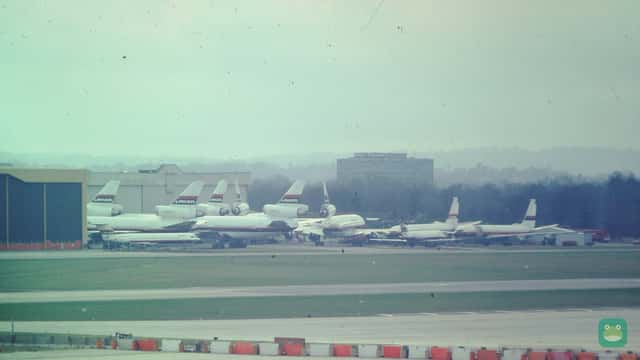
Getting a plane proved easier than getting permission. British authorities initially rejected the application in 1971. Laker won an appeal, and in 1972 the Civil Aviation Authority confirmed a license that specified Stansted as the London airport. His first widebody DC-10 arrived that November. While the transatlantic proposal stalled, the airline found charter work for its aircraft, including flights to Canada.
In 1975 the British government tried to withdraw the Skytrain license. Laker challenged the decision in court and won. American approval followed in 1977. By the time paying passengers boarded on September 26, the London end of the route was Gatwick. Licensing and fleet history · Contemporary account of the launch
- Freddie Laker establishes Laker Airways
- British authorities reject the first Skytrain application
- Laker wins a license and takes delivery of its first DC-10
- The British government moves to withdraw the license
- Skytrain begins flying between Gatwick and JFK
What it took to fill 345 seats#
At launch, Skytrain sold one-way tickets on the day of travel. A meal cost extra. In New York, anyone weighing the trip to Queens could call a recorded message, updated hourly, to hear how many seats remained. With 345 seats on a DC-10 and one departure each way per day, it mattered whether you were near the front of the line. How Skytrain ticketing worked
The first eastbound crossing carried 344 paying passengers. The next flight west from Gatwick carried just 111, against a reported break-even figure of 189. The two departures tell more about Laker’s business than the opening-night crowd alone. A nearly full cabin could pay handsomely one way. The airline still owed the crew, fuel supplier and aircraft lender on the way back. Reporting from the first crossings
Skytrain spread beyond New York. Los Angeles joined the network, followed by Miami in 1980 and Tampa in 1981. But growth tied more of the airline’s fortunes to the DC-10. When the type was grounded in 1979 after an American Airlines crash in Chicago, an accident at another carrier interrupted Laker’s business. Fleet and route history
Why Laker stopped flying#
By the early 1980s, recession had weakened demand across the Atlantic. High interest rates put pressure on borrowers, and a falling pound made Laker’s dollar-denominated aircraft debts more expensive. A fare sold in Britain brought in pounds. As sterling fell, the airline needed more of those pounds to make the same payment. Negotiations with banks and manufacturer McDonnell Douglas failed to secure a rescue. On February 5, 1982, Laker Airways entered receivership. Contemporary coverage of the collapse
The dispute over what brought it down continued in the United States. Laker’s liquidator pursued antitrust claims alleging that competitors had conspired to drive the airline out of business. In 1985, British Airways said the out-of-court settlement provided $48 million for creditors and $8 million for Freddie Laker personally. The agreement settled the claims without a trial verdict on the allegations. Federal court record · Contemporary settlement report
Barely a year after Laker folded, People Express was selling Newark–Gatwick for $149 one way. The idea survived because it made sense to a passenger standing in Queens with a passport and an evening to spare. The harder question for every airline that followed was the one Laker faced on its second westbound flight. What do you do tomorrow if only 111 people turn up? From Laker to Norse, the Seats Frog history of low-cost long-haul flying
Cite this article
Patrick Karsh. “The history of Laker Airways, the airline that sold London to New York for £59.” Seats Frog. Published 2026-11-28. https://www.seatsfrog.com/news/laker-airways-history-freddie-laker-skytrain
Wikipedia citation
{{cite news |title=The history of Laker Airways, the airline that sold London to New York for £59 |url=https://www.seatsfrog.com/news/laker-airways-history-freddie-laker-skytrain |work=Seats Frog |author=Patrick Karsh |date=2026-11-28 |language=en}}CSL-JSON for reference managers
{
  "id": "https://www.seatsfrog.com/news/laker-airways-history-freddie-laker-skytrain",
  "type": "article-newspaper",
  "title": "The history of Laker Airways, the airline that sold London to New York for £59",
  "URL": "https://www.seatsfrog.com/news/laker-airways-history-freddie-laker-skytrain",
  "container-title": "Seats Frog",
  "language": "en",
  "author": [
    {
      "literal": "Patrick Karsh"
    }
  ],
  "issued": {
    "date-parts": [
      [
        2026,
        11,
        28
      ]
    ]
  }
}Citations identify this article and its publication date. Assess the reporting and its linked sources before using it as evidence.
Read this article as Markdown or JSON. Cite the original page and retain its sources, dates and qualifications.
Embed this article summary
Paste this HTML into your page. The summary stays linked to the full story and updates with it. No account required.
<iframe src="https://www.seatsfrog.com/embed/news/laker-airways-history-freddie-laker-skytrain?theme=auto" title="The history of Laker Airways, the airline that sold London to New York for £59 by Seats Frog" width="100%" height="440" style="border:0;max-width:100%" loading="lazy"></iframe>
<p style="font-size:14px">The history of Laker Airways, the airline that sold London to New York for £59 by <a href="https://www.seatsfrog.com/news/laker-airways-history-freddie-laker-skytrain" rel="nofollow">Seats Frog</a></p>
<script async src="https://www.seatsfrog.com/embed.js"></script>