From Laker to Norse: Why low-cost long-haul airlines keep failing
Across five decades, a cheap seat across the ocean has proved easier to sell than to keep flying.
In May 1983, a passenger could fly from Newark to London Gatwick for $149 one way. People Express made that fare possible with a Boeing 747 leased from Braniff, an airline that had already gone bankrupt. Three years later, People Express itself agreed to be sold. The airplane had outlasted one business plan and was about to outlast another. The first flight · The sale agreement
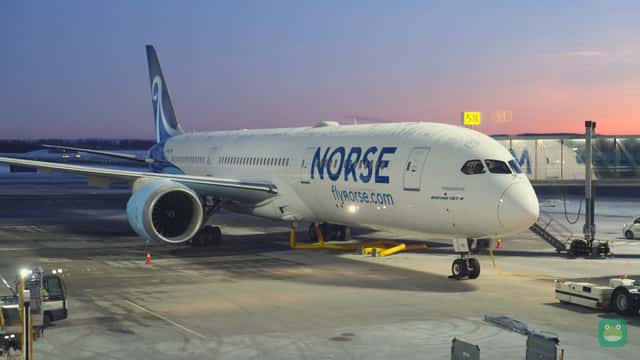
That history acquired another chapter on November 27, 2026, when Norse Atlantic Airways AS, the group’s Norwegian operating subsidiary, resolved to file for bankruptcy. By then, nearly half a century of experiments had demonstrated an enduring appetite for cheap ocean crossings. They had also exposed how differently the arithmetic could go wrong for the airlines selling them. Norse Atlantic’s filing announcement
Laker opened the Atlantic to bargain hunters#
Freddie Laker’s Skytrain began flying between London Gatwick and New York on September 26, 1977. Its walk-up model offered a bargain to travelers willing to chance getting a seat. The DC-10 gave Laker a great many of those seats to sell on each crossing. Buying the aircraft also left the British carrier with debts payable in dollars. University of Westminster research
When sterling fell, Laker needed more pounds to make the same aircraft payment. Recession weakened transatlantic demand, and high interest rates added to the strain. On February 5, 1982, after attempts to reach a deal with lenders and the aircraft manufacturer failed, Laker entered receivership. People Express crossed the Atlantic the following year. Its own sale to Texas Air came amid financial trouble that extended across its U.S. business, including its bankrupt Frontier subsidiary. Neither carrier’s fate can be explained by the price of a London ticket alone. Laker’s receivership · The People Express deal
In 2008, fuel changed the price of a seat already sold#
Oasis Hong Kong Airlines brought the idea to Asia in 2006 with Boeing 747-400s. Its network was still just two routes when it stopped flying on April 9, 2008. Both linked Hong Kong to cities with substantial long-distance travel markets, London Gatwick and Vancouver. On paper Oasis held 13 route licenses. Only two had become services before the company went into liquidation. Hong Kong licensing authority’s record · Government liquidation notice
That August, Zoom grounded its transatlantic flights. Its UK managing director put the fuel shock in terms a passenger could understand. The increase amounted to roughly £80 to £90 per return ticket to Canada. Someone who had booked months earlier had locked in a fare. Zoom still had to buy the fuel to bring that traveler home. Contemporary reporting on Zoom’s fuel bill
- Laker entered receivership
- People Express agreed to a sale
- Oasis and Zoom stopped flying
- AirAsia X withdrew from London and Paris
AirAsia X took a different course in 2012. It dropped London and Paris, citing expensive fuel, soft European demand and taxes. The company’s subsequent financial report recorded a shorter average route length after those and other cuts. Long-haul flying could still have a place in its business even if Kuala Lumpur to Europe no longer paid. Reuters on the withdrawals · AirAsia X financial report
Iceland split the crossing in two#
WOW air offered another way to sell a cheap ticket from North America to Europe. A stop in Iceland let it use smaller, single-aisle aircraft on many routes and combine passengers headed for different European cities. The tradeoff came at the connection. The fare paid by one traveler now had to cover a seat on two departures.
WOW carried 3.5 million passengers in 2018. By December it was negotiating to return aircraft, including all its widebody Airbus A330s. On March 28, 2019, it ceased operations. Another Icelandic carrier, PLAY, later identified exactly where its own version of the idea was struggling. In 2024 it said the fares it earned on connecting traffic across the Atlantic had disappointed. That October it filled 85.3% of its seats, a company record for the month, even as it reduced transatlantic capacity. PLAY stopped flying on September 29, 2025. A passenger count could tell investors how popular the flights were. It took the fare data to tell them what those passengers were worth. WOW traffic figures · WOW fleet announcement · PLAY’s strategy change · October traffic report · Icelandic Transport Authority closure notice
Two Norwegian companies, two different endings#
Norwegian Air Shuttle used Boeing 787 Dreamliners for nonstop long-haul service. The pandemic grounded its entire 787 fleet in March 2020. In January 2021, with travel restrictions still in place and the timing of a recovery uncertain, Norwegian announced that long-haul flying would end. It rebuilt around shorter European routes. For passengers the Dreamliner service disappeared. For the airline, giving it up was part of surviving. Norwegian’s restructuring announcement
Norse Atlantic, a separate company, returned to the low-fare widebody idea. In November 2026 its immediate problem was cash. The group suspended operations while seeking urgent financing, and the Norwegian operating subsidiary moved to file for bankruptcy the next day. As of November 28, the listed parent and the UK subsidiary were still seeking a way forward. Suspension announcement · Reuters on the remaining businesses
A traveler comparing fares sees the price of one seat on one date. An airline has to make the whole cabin pay across the year. Laker owed dollars as the pound fell. Zoom had sold tickets before its fuel bill jumped. PLAY filled a record share of seats one October while pulling back from the Atlantic. Each found customers for a cheap crossing. The harder part was earning enough on those customers to operate the next one.
Cite this article
Patrick Karsh. “From Laker to Norse: Why low-cost long-haul airlines keep failing.” Seats Frog. Published 2026-11-28. https://www.seatsfrog.com/news/low-cost-long-haul-airline-failures-laker-to-norse
Wikipedia citation
{{cite news |title=From Laker to Norse: Why low-cost long-haul airlines keep failing |url=https://www.seatsfrog.com/news/low-cost-long-haul-airline-failures-laker-to-norse |work=Seats Frog |author=Patrick Karsh |date=2026-11-28 |language=en}}CSL-JSON for reference managers
{
  "id": "https://www.seatsfrog.com/news/low-cost-long-haul-airline-failures-laker-to-norse",
  "type": "article-newspaper",
  "title": "From Laker to Norse: Why low-cost long-haul airlines keep failing",
  "URL": "https://www.seatsfrog.com/news/low-cost-long-haul-airline-failures-laker-to-norse",
  "container-title": "Seats Frog",
  "language": "en",
  "author": [
    {
      "literal": "Patrick Karsh"
    }
  ],
  "issued": {
    "date-parts": [
      [
        2026,
        11,
        28
      ]
    ]
  }
}Citations identify this article and its publication date. Assess the reporting and its linked sources before using it as evidence.
Read this article as Markdown or JSON. Cite the original page and retain its sources, dates and qualifications.
Embed this article summary
Paste this HTML into your page. The summary stays linked to the full story and updates with it. No account required.
<iframe src="https://www.seatsfrog.com/embed/news/low-cost-long-haul-airline-failures-laker-to-norse?theme=auto" title="From Laker to Norse: Why low-cost long-haul airlines keep failing by Seats Frog" width="100%" height="440" style="border:0;max-width:100%" loading="lazy"></iframe>
<p style="font-size:14px">From Laker to Norse: Why low-cost long-haul airlines keep failing by <a href="https://www.seatsfrog.com/news/low-cost-long-haul-airline-failures-laker-to-norse" rel="nofollow">Seats Frog</a></p>
<script async src="https://www.seatsfrog.com/embed.js"></script>